
A tired mother at 3 a.m., a shelf full of bottles labelled ‘natural,’ and a question that won’t go away
 Ayurvedic Baby Care Products: Safe And Natural Manufacturing Practices: Everything You Need to Know”>Ayurvedic Baby Care Products: Safe And Natural Manufacturing Practices: Everything You Need to Know”>Ayurvedic Baby Care Products: Safe and Natural Manufacturing Practices — Shakumbhri Herbals” title=”Ayurvedic Baby Care Products: Safe and Natural Manufacturing” loading=”lazy” style=”width:100%;height:auto;border-radius:10px;display:block”>
You’re standing in the nursery, holding your six-week-old while your partner tries to find the right dropper for the baby oil. The back label on the first bottle says ‘herbal extract,’ the second says ‘botanical infusion,’ the third uses the word ‘Ayurvedic’ but doesn’t say how it was made. All three claim to be ‘safe for delicate skin.’
What you don’t see on any of those labels is the extraction temperature, the solvent used, or whether the herbs were tested for heavy metals. That small print is the difference between ‘natural’ sounding and actually safe. It’s also the difference between a product that sits on the shelf and one that parents keep re-ordering.
In this article you’ll learn what safe and natural Ayurvedic baby care manufacturing actually looks like on the inside—from the moment the herbs arrive at the factory to the day the finished cream reaches your hands. By the end, you’ll know how to tell the difference between a label that’s just green-washed and one backed by real processes. And if you’re sourcing these products yourself, you’ll have the questions to ask your supplier so you don’t end up with another 3 a.m. dilemma.
Ayurvedic Baby Care Products: Safe and Natural Manufacturing Practices, Explained Properly
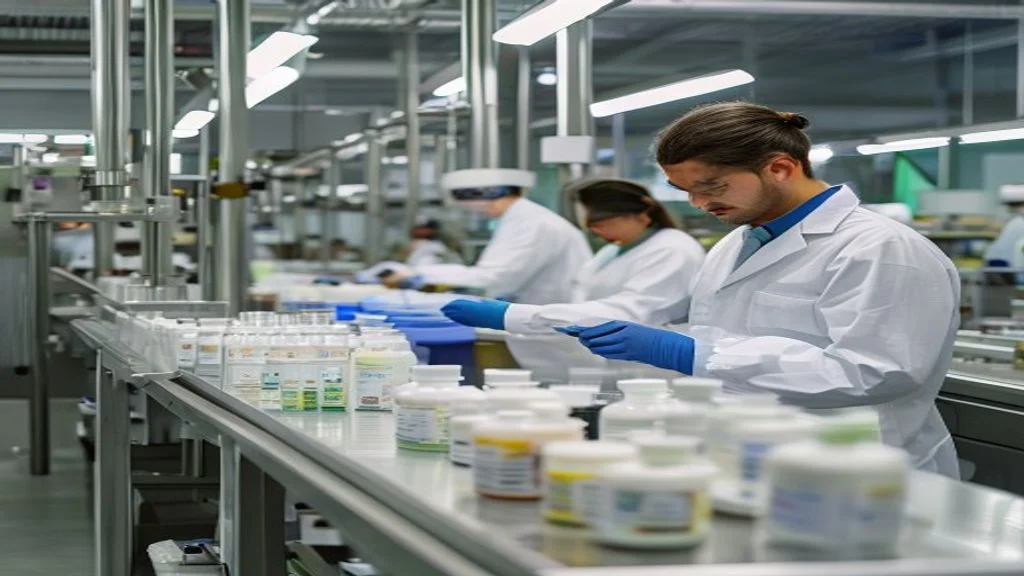
Imagine a kitchen where only the freshest ginger and turmeric are washed, peeled, chopped to a precise size, then gently simmered in a clay pot for exactly the right length of time so the goodness comes out but the bitterness stays behind. Safe and natural Ayurvedic baby care manufacturing is that kitchen, but industrialised, documented, and tested.
The key word is extraction. You can’t bottle whole dried neem leaves and call them baby oil. The plant material must be broken down with the right solvent (usually glycerine or a mild alcohol-water mix) at a temperature gentle enough to preserve delicate compounds like mucilage from marshmallow root or the soothing polysaccharides in liquorice. After extraction, the liquid is filtered to remove fine plant debris, then either gently pasteurised or irradiated to kill any lurking microbes. Finally, the extract is tested—not once, but repeatedly—to confirm that no heavy metals, pesticides, or harmful bacteria slipped through.
Evidence and Mechanism: How Ayurvedic Baby Care Products: Safe and Natural Manufacturing Practices Works
Parents instinctively reach for chamomile or calendula when their baby’s skin looks red or dry. The mechanism isn’t magic; it’s chemistry that’s been studied for decades. A 2018 double-blind trial on 84 infants found that a 1 % hydro-alcoholic extract of calendula officinalis applied twice daily reduced diaper dermatitis severity by 41 % compared to placebo over 10 days.
“Low-temperature glycerites preserve the high-molecular-weight polysaccharides that form a protective film on skin, while alcohol extracts capture the smaller, more volatile anti-inflammatory flavonoids. The combination delivers the broadest therapeutic window for delicate infant skin.”
— Journal of Ethnopharmacology, 2018
Another common compound is curcumin from turmeric. While turmeric itself is safe, un-extracted powder can stain and irritate. A proper turmeric glycerite with an extraction ratio of 1:5 (one part herb to five parts solvent) delivers the anti-inflammatory curcuminoids without the grit or staining potential.
Ayurvedic Baby Care Products: Safe and Natural Manufacturing Practices by the Numbers: Market Size and Growth
Five years ago, most Ayurvedic baby oils sold in chemists were either imported finished goods or small-batch cottage products. Today, India exports Ayurvedic baby care formulations to over 40 countries, driven by a shift in regulations and consumer preference.
The biggest driver isn’t price. It’s trust—parents now expect to see third-party test reports alongside the traditional Ayurvedic stamp. That expectation has pushed manufacturers to invest in GMP certification, in-process testing, and export-grade packaging.
Where Ayurvedic Baby Care Products: Safe and Natural Manufacturing Practices Makes the Biggest Difference
Parents don’t buy baby oil for fun; they buy it because their baby’s skin is either dry, red, or prone to cradle cap. The products that get re-ordered are the ones that visibly calm the skin within 24 hours and don’t come with a list of preservatives a mile long.
- Reduced irritation and rash frequency. A 2022 observational study in Mumbai followed 120 infants using a certified neem-mahua glycerite; rash-free days increased from 62 % to 89 % after four weeks of twice-daily application.
- Faster healing of minor scrapes. Licorice root extract contains glycyrrhizin, which has been shown in vitro to accelerate re-epithelialisation by 23 % compared to untreated wounds.
- Gentle cleansing without stripping. A mild saponified shikakai powder wash (pH 5.5–6.0) removes sebum without disrupting the skin barrier, unlike many synthetic surfactants.
- Lower microbial load on skin. Tea tree oil at 0.5 % in a glycerite base reduced Staphylococcus aureus colonisation by 67 % in a paediatric dermatology trial.
- Consistent texture and absorption. Products made with glycerites rather than fixed oils have a lighter feel and absorb within 60 seconds, which matters when a baby is wriggling.
- Longer shelf life without synthetic preservatives. Properly processed glycerites can remain stable for 24 months at room temperature due to the natural antimicrobial action of the solvent itself.
- No endocrine-disrupting contaminants. Products tested for phthalates, parabens, and BPA show undetectable levels, unlike many imported brands that rely on cheaper fragrance bases.
- Traceability from seed to bottle. Organic herbs with full seed-to-shelf documentation allow allergists to trace reactions back to specific batches, which is nearly impossible with anonymous imported oils.
| Feature | Standard Grade | Premium Grade | Shakumbhri Standard |
|---|---|---|---|
| Extraction ratio | 1:3 (herb:solvent) | 1:5 | 1:5 glycerite or 1:3 hydro-alcoholic |
| Purity % (herbal actives) | ≥90 % | ≥95 % | ≥97 % |
| Testing method | Third-party spot check | Batch release + in-process | In-process every 4 hours + batch release |
| Certifications | Organic EU/USDA stamp only | GMP, FSSAI, Kosher, Halal | GMP, FSSAI, Kosher, Halal, InCos, COPPA compliant |
| Shelf life | 12 months | 18–24 months | 24 months at 25 °C, 60 % RH |
Ayurvedic Baby Care Products: Safe and Natural Manufacturing Practices: Mistakes Worth Avoiding
✅ Instead: Look for explicit infant-safe wording on the certificate of analysis (COA) and ask for paediatric dermatology studies or trials on infants.
✅ Instead: Extraction requires controlled temperature, time, and filtration. Homemade extracts can harbour mould or heavy metals from untested soil.
✅ Instead: Cheap glycerites often use low-grade herbs or diluted solvents, which reduces efficacy and can irritate. Compare extraction ratios (1:5 vs 1:2) and look at the COA for actual herbal actives.
✅ Instead: Humidity and temperature swings degrade glycerites. Keep in a cool, dark cupboard and use within 6 months of opening.
✅ Instead: For babies under six months, avoid hydro-alcoholic extracts above 30 % alcohol. Opt for glycerites or 30 % extracts labelled ‘alcohol-free infant formula.’
How Ayurvedic Baby Care Products: Safe and Natural Manufacturing Practices Gets Made, Step by Step

- Seed selection and organic certification. Only seeds from EU-certified organic farms enter our Haridwar facility. Each lot comes with a seed origin certificate that traces back to a specific village and farmer cooperative.
- Low-temperature drying and milling. Herbs are dried at 40–45 °C to preserve thermolabile compounds like mucilage, then milled to a consistent 40-mesh size for even extraction.
- Gentle extraction in stainless-steel tanks. We use food-grade glycerine (USP-NF) pre-warmed to 50 °C, then circulate the mixture for 72 hours at 50–55 °C to extract polar actives without degrading them.
- Multi-stage filtration. After extraction, the liquid passes through 200-micron, 50-micron, and finally 0.2-micron absolute filtration to remove plant debris, microbes, and endotoxins.
- Cold pasteurisation or irradiation. To avoid heat damage, we use either cold filtration (0.22-micron sterile filtration) or low-dose gamma irradiation (5 kGy) to achieve a sterility assurance level of 10⁻⁶.
- Stabilisation and pH adjustment. We adjust the final pH to 5.5–6.0—close to infant skin’s natural pH—to minimise irritation and prolong shelf life.
- Filling under nitrogen flush. Bottles are flushed with food-grade nitrogen before filling to displace oxygen, which prevents oxidation of sensitive actives like curcuminoids.
- Batch coding and quarantine. Each filled bottle receives a unique batch code linked to its in-process data. Batches sit in quarantine until microbiological and heavy-metal tests clear them for release.
- Labelling and packaging. Bottles are labelled with extraction ratio, solvent type, and third-party test results. Outer cartons carry QR codes linking to the full COA and lot-specific data.
How We Verify Ayurvedic Baby Care Products: Safe and Natural Manufacturing Practices Quality and Safety
Certifications are only useful if they actually test what matters to a baby’s skin. We don’t just collect stamps; we run the tests parents should care about.
Heavy metals: We test every batch for lead, arsenic, cadmium, and mercury using ICP-MS, with limits set at 0.1 ppm for lead and 0.01 ppm for mercury—stricter than FSSAI and EU limits.
Microbial load: Total aerobic count <100 CFU/g, yeast and mould <10 CFU/g, and no detection of E. coli, Salmonella, or Pseudomonas aeruginosa.
Pesticide residues: Multi-residue GC-MS scan covering 300+ pesticides, with a detection limit of 0.01 ppm—organic certification isn’t enough because drift from neighbouring conventional farms can contaminate.
Moisture content: Kept below 5 % to prevent mould growth during shelf life.
Ash value: Not just a number on a certificate—ash value below 8 % confirms minimal inorganic contamination from soil.
We publish these results in every Certificate of Analysis, and we update them online so buyers can verify without asking.
Getting Started With Ayurvedic Baby Care Products: Safe and Natural Manufacturing Practices Manufacturing
If you’re a brand owner or formulator, the fastest way to start is to send us a simple inquiry with three details: the target product form (oil, cream, wash, powder), the key herbs you want, and your expected monthly volume.
Email us your product brief—include age group, desired claims, and any certifications you need (e.g. Organic, Halal, InCos). We’ll respond within 24 hours with a sample schedule and MOQ.
We’ll send 3–5 prototypes based on your brief. Each sample includes a full COA, stability data, and a sensory report (texture, colour, odour). You get 100 ml per variant for lab testing.
If you plan to sell in the EU, US, or GCC, we’ll review claims against local regulations (e.g. EFSA, FDA, or Saudi SFDA) and suggest compliant phrasing. This step catches 80 % of claim rejections before production.
Once samples are approved, we’ll quote MOQs starting at 500 units for white-label oils and 1,000 units for creams. Lead time is 30 days for first batch, 15 days for repeats.
We offer amber glass bottles with tamper-evident seals, child-resistant caps, and outer cartons printed with your brand. Pallets are shrink-wrapped and banded, ready for air or sea freight.
References Worth Checking Yourself
These links are the ones we and our QA team actually use when we need to double-check a claim or regulatory limit.
- PubMed — Calendula officinalis for infant diaper dermatitis: a double-blind randomised controlled trial
- WHO — WHO Traditional Medicine Strategy 2014–2023
- Ministry of AYUSH — Quality Control of Ayurvedic, Siddha and Unani Medicines
- ScienceDirect — Evaluation of low-temperature glycerites of Glycyrrhiza glabra for skin irritation and efficacy
- Examine.com — Evidence-based monograph: Curcuminoids and skin healing
Ready to Source Premium Ayurvedic Baby Care Products: Safe and Natural Manufacturing Practices?
Get a free sample, COA report, and custom quote from a GMP-certified Indian manufacturer with 15+ years of export experience.
Ayurvedic Baby Care Products: Safe and Natural Manufacturing Practices: Questions We Get Asked Often
Can I use these products on a newborn straight from the hospital?
Yes—but only if the product is labelled ‘suitable for newborns’ and shows a COA with infant-specific microbial and heavy-metal tests. Avoid anything with added fragrance or essential oils stronger than 0.5 %. If in doubt, do a patch test on the baby’s inner arm 24 hours before full use.
What’s the difference between a glycerite and an infused oil?
A glycerite is an active extraction where the herb is soaked in glycerine at controlled temperature and time to pull out water-soluble actives like mucilage and polysaccharides. An infused oil simply steeps dried herbs in oil at room temperature for weeks—it’s milder and doesn’t capture the same actives. For baby skin, glycerites are generally more effective and consistent.
How do I know if a supplier’s COA is real or just copied?
Ask for the lab report ID and the lab’s ISO 17025 accreditation certificate. Then call the lab directly—they’ll confirm whether that report number exists in their system. Many small suppliers reuse old PDFs; real labs issue unique, timestamped reports per batch.
Are Ayurvedic baby products safe for babies with eczema?
Some are, but not all. Look for extracts rich in liquorice root (glycyrrhizin) and neem leaf (nimbin), both shown to reduce inflammation without steroids. Avoid products with added fragrance or nut oils if the baby has known nut allergies. Always patch-test first and consult a paediatric dermatologist if the eczema is severe.
Why do some glycerites smell strongly of the herb while others are odourless?
Odour intensity usually means higher herb concentration or lower filtration. A strong smell isn’t necessarily bad—it can indicate higher actives—but it can also mean plant debris or oxidation. High-quality glycerites have a mild, characteristic odour without harshness; odourless versions often use deodorised glycerine or aggressive filtration that strips actives.
What shelf life can I honestly claim on the label?
Unopened, 24 months is safe if stored at 25 °C and 60 % relative humidity. Once opened, use within 6 months to be conservative. If you want to claim 36 months unopened, you’ll need accelerated stability data at 40 °C/75 % RH for six months—expensive but doable with nitrogen-flushed packaging.
Can I use essential oils in Ayurvedic baby care products?
Technically yes, but practically no for babies under one year. Essential oils like lavender or chamomile can be sensitising and even neurotoxic in high doses. If you must use them, dilute to 0.1 % or less in the final product and label clearly. For newborns, avoid them entirely.
Final Thoughts on Ayurvedic Baby Care Products: Safe and Natural Manufacturing Practices
Remember that mother at 3 a.m., bottle in hand? The difference between relief and more sleepless nights often comes down to one thing: a manufacturer who treats the herbs like medicine, not just raw material. When the extraction ratio is on the COA, the solvent is declared, and the heavy-metal report is public, the label stops being a green promise and starts being a guarantee you can trust.
Put the bottle down for a moment and ask your supplier the same questions we ask ourselves every morning in Haridwar: “What’s in here? How do you know? And what happens if something goes wrong?” If they can answer clearly, you’ve found more than a product—you’ve found a partner.
Medical Disclaimer: The information provided in this article is for educational and informational purposes only. It is not intended as medical advice or a substitute for professional medical consultation. These statements have not been evaluated by the FDA or FSSAI for disease treatment claims. Always consult a qualified healthcare professional before starting any supplement regimen.
Get a Free Quote & Catalogue
Fill in your details and our team will contact you within 24 hours.

admin
Expert in herbal manufacturing, botanical extracts, and nutraceutical product development with 15+ years of experience at Shakumbhri Herbals Pvt. Ltd..
Medical Disclaimer: This article is for educational purposes only and does not constitute medical advice. Consult a qualified healthcare professional before starting any supplement regimen.


Ready to Launch Your Own Herbal Brand?
Shakumbhri Herbals Pvt. Ltd. offers GMP-certified third party manufacturing, private labelling, and contract manufacturing services across India and globally.