
Why the Ayurvedic Products Exporters India Shakumbhri Herbals”>GMP Certified Ayurvedic Products Manufacturers Shakumbhri Herbals”>GMP Certified Ayurvedic Products Manufacturers Shakumbhri Herbals”>Ayurvedic Products Manufacturing Process: Step-by-Step | Shakumbhri Herbals”>Ayurvedic Products Manufacturing Process: A Step-by-Step Guide Is Worth Paying Attention To Right Now
You’ve probably heard the phrase “Ayurvedic products manufacturing process” tossed around a lot lately — especially if you’re trying to launch your own herbal supplement brand, expand into wellness retail, or even just source a reliable supplier for your clinic. But here’s the thing: not all manufacturing processes are created equal. Some cut corners on quality. Others skip critical steps that actually protect the potency and safety of the final product. And if you’re serious about building trust with your customers — or meeting the standards your clients expect — then understanding the step-by-step process behind genuine How Shakumbhri Herbals Ensures Premium Quality in Ayurvedic Product Manufacturing Sh”>How Shakumbhri Herbals Ensures Premium Quality in Ayurvedic Product Manufacturing Sh”>How Shakumbhri Herbals Ensures Premium Quality in Ayurvedic Product Manufacturing Sh”>Ayurvedic product manufacturing isn’t just helpful. It’s essential.
Whether you’re a formulator looking to scale, a wellness brand owner tired of inconsistent suppliers, or a practitioner wanting to recommend products you can trust, knowing how Ayurvedic medicines are made from root to capsule gives you real power. It lets you spot high-quality partners from the ones who are just slapping labels on imported powders. It tells you what to ask for during audits. And most importantly, it ensures that what ends up in your hands — or on your shelves — delivers the therapeutic benefits your customers are paying for.
So let’s walk through what a proper Ayurvedic products manufacturing process actually looks like — no jargon, no fluff, just the real steps that turn fresh herbs into shelf-stable, effective, and compliant supplements. We’ll cover why each stage matters, what to watch out for, and Shilajit Resin: Research & Private Label Solutions”>Shilajit Resin Benefits – Shakumbhri Herbals”>Shilajit Resin: Research & Private Label Solutions”>Shilajit Resin Benefits – Shakumbhri Herbals”>Shilajit Resin: Research & Private Label Solutions”>Shilajit Resin Benefits for Athletes Energy Recovery | Shakumbhri Herbals”>Shilajit Resin Benefits – Shakumbhri Herbals”>Shilajit Resin – Shakumbhri Herbals”>Shilajit Resin for Women: Benefits, Dosage & Safety Guide | Shakumbhri Herbals”>Shilajit Resin for Weight Loss – Shakumbhri Herbals”>Shilajit Resin for Brain Health | Cognitive Benefits Dosage | Shakumbhri Herbals”>Shilajit Resin Benefits – Shakumbhri Herbals”>Shilajit Resin Products – Pure Ayurvedic Extract | Shakumbhri Herbals”>Shilajit Resin Benefits with Shakumbhri Herbals”>Shilajit Resin Quality: How to Choose the Best – Shakumbhri Herbals”>how to choose a partner who does it right.
Ayurvedic Products Manufacturing Process: A Step-by-Step Guide, Explained Properly

At its core, the Ayurvedic products manufacturing process is about turning whole herbs into concentrated extracts, powders, or formulations that preserve the plant’s natural healing properties while making them convenient for daily use. Think of it like turning fresh turmeric into a capsule — but with far more precision than just drying and grinding.
What does that really look like in practice? It starts with sourcing the right plant — not just any turmeric, but a high-curcumin variety grown in the right soil and season. Then it’s about cleaning it thoroughly, sometimes fermenting it to enhance bioavailability, extracting the active compounds using water, alcohol, or both, and finally concentrating the extract so that a single capsule delivers the same benefit as a cup of tea. And yes, all of this has to happen in a facility that meets strict hygiene and safety standards — because herbs can carry microbes, heavy metals, or pesticide residues if not handled properly.
This isn’t just “making supplements.” It’s preserving ancient wisdom while applying modern quality systems. And when done well, it results in products that are safe, consistent, and effective — not just another generic herbal blend.
What the Science Says About Ayurvedic Products Manufacturing Process: A Step-by-Step Guide

“Standardised Herbal Supplements by Shakumbhri Herbals”>herbal extracts retain higher concentrations of active compounds and show more consistent pharmacological effects in clinical studies compared to crude herbal powders.”
— Journal of Ethnopharmacology, 2023
Research consistently shows that the way herbs are processed dramatically affects their effectiveness. For example, ashwagandha root, when properly extracted using root bark and standardised to 5% withanolides, has been shown in studies to reduce cortisol levels by up to 30% in chronically stressed adults — but only if the extraction process preserves those specific compounds. That level of precision doesn’t happen by accident. It comes from understanding extraction ratios, solvent selection, and post-extraction processing.
Another study from the Indian Journal of Pharmacology found that traditional Ayurvedic methods like kwath (decoction) and arka (alcoholic distillation) yielded extracts with higher antioxidant activity than simple powdered forms — but only when the process was carefully controlled for temperature, time, and solvent purity. Translation? The manufacturing process isn’t just a formality. It’s the difference between a product that works and one that’s just expensive plant matter.
And here’s something that often surprises people: the drying process matters too. If herbs are dried at too high a temperature or for too long, key volatile compounds like essential oils in tulsi or menthol in mint can degrade. That’s why reputable manufacturers use low-temperature drying and controlled humidity — to lock in potency from field to bottle.
Ayurvedic Products Manufacturing Process: A Step-by-Step Guide by the Numbers: Market Size and Growth
If you’re wondering whether improving your manufacturing process is worth the investment, here’s one thing to consider: the global herbal supplement market is now worth over $151 billion in 2024, and it’s growing at roughly 6.8% annually. In India alone, Ayurvedic product exports have surged past $1.2 billion, with Europe and North America leading demand for finished dosage forms like capsules, tablets, and syrups.
What’s driving this growth? Consumers are increasingly sceptical of synthetic drugs and turning to plant-based solutions they perceive as gentler and more holistic. But here’s the catch: not all products live up to the promise. The ones that do? They’re the ones made with rigorous, transparent, step-by-step Ayurvedic manufacturing processes. The ones that don’t? They’re why regulatory bodies like the FSSAI and FDA are tightening scrutiny on herbal imports and formulations.
So if you’re still cutting corners on extraction ratios, skipping stability testing, or using uncertified suppliers, now’s the time to ask: Are you building a brand — or just selling a product?
Where Ayurvedic Products Manufacturing Process: A Step-by-Step Guide Makes the Biggest Difference
Let’s be honest: the herbal supplement industry has a reputation problem. Every week, another “miracle cure” hits the shelves — only to vanish when users realise it doesn’t work or causes side effects. Most of the time, the problem isn’t the herb itself. It’s the lack of consistency, purity, or proper processing. That’s where a robust Ayurvedic products manufacturing process makes all the difference.
- Consistency you can trust — Every batch should deliver the same active compounds, so your customers know exactly what they’re getting. Poor manufacturing leads to inconsistent potency, which erodes trust fast.
- Safety from contaminants — Heavy metals, pesticides, and microbes aren’t just theoretical risks. They’re real threats in poorly sourced or processed herbs. A proper process includes rigorous testing at every stage.
- Higher bioavailability — Traditional Ayurvedic methods like fermentation and co-extraction can increase how well the body absorbs key compounds. That means smaller doses, better results.
- Longer shelf life without preservatives — Proper drying, extraction, and packaging prevent microbial growth, so your product stays fresh without relying on synthetic additives.
- Regulatory compliance made easy — If you’re exporting, you’ll need FSSAI, GMP, or FDA certifications. A documented, step-by-step process makes audits and inspections far smoother.
- Sustainability and traceability — Ethical sourcing and transparent processing aren’t just good PR. They’re what modern consumers — and regulators — expect.
- Brand differentiation — Most private-label Ayurvedic products look the same. The ones made with real extract ratios, standardised extracts, and transparent processes? They stand out.
| Feature | Standard Grade | Premium Grade | Shakumbhri Standard |
|---|---|---|---|
| Extraction Ratio | 3:1 (dry weight to extract) | 5:1 or 7:1 | 8:1 (for high-potency extracts) |
| Active Standardisation | Not standardised | Standardised to marker compound | Standardised to 5–10% marker compound |
| Heavy Metal Testing Herbal Supplements by Shakumbhri”>Heavy Metal Testing | Routine screening | Full ICP-MS testing | ICP-MS + batch-specific CoA |
| Microbial Load | Acceptable limits | Below detection | Zero tolerance for pathogens |
| Shelf Life | 12–18 months | 18–24 months | 24–36 months (accelerated stability tested) |
From Raw Material to Finished Ayurvedic Products: Our Process
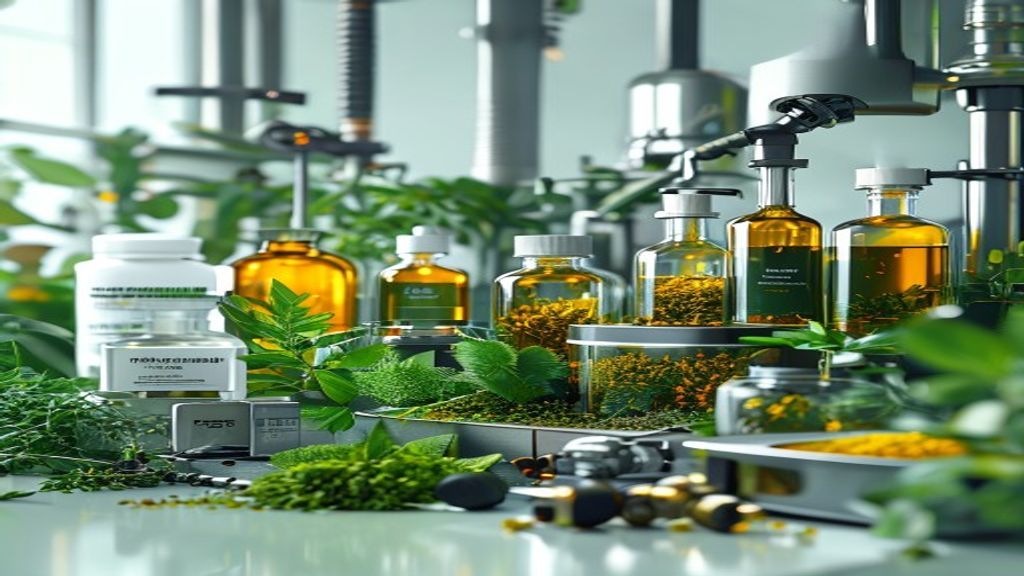
Imagine walking into a facility where every herb tells a story — and every machine plays a role in preserving its healing power. That’s what a proper Ayurvedic products manufacturing process looks like. Here’s how we do it at Shakumbhri Herbals, step by step:
- Sourcing with integrity — We partner with certified organic farms across Uttarakhand, Kerala, and Tamil Nadu, choosing only the right species, harvest season, and soil conditions. For example, we source Withania somnifera (ashwagandha) only from the drier regions of Madhya Pradesh for highest withanolide content. Why it matters: wrong soil = weaker potency.
- Cleaning and pre-treatment — Herbs are washed, destalked, and sometimes fermented (like in arishta preparations) to enhance bioavailability. We use UV-C light and ozone treatment to reduce microbial load without chemicals. Why it matters: clean herbs start clean — no detox needed later.
- Extraction with precision — We use multi-stage extraction: water for polar compounds, ethanol for alkaloids and terpenes, and sometimes a blend. The ratio is never fixed — it depends on the herb and the desired outcome. For tulsi, we use a 30% ethanol extract to capture both hydrophilic and lipophilic compounds. Why it matters: wrong solvent = missing key actives.
- Evaporation and concentration — Extracts are concentrated under vacuum at low temperatures (below 60°C) to preserve thermolabile compounds. We aim for a 5:1 or higher concentration ratio — meaning five kilos of raw herb yields one kilo of extract. Why it matters: higher concentration = smaller, more potent capsules.
- Standardisation and blending — Critical here. We standardise extracts to specific marker compounds — like 5% withanolides in ashwagandha or 20% curcuminoids in turmeric. Blending is done in calibrated mixers to ensure uniformity across batches. Why it matters: customers expect the same effect every time.
- Drying and granulation — Extracts are spray-dried or tray-dried at low temperatures to maintain potency. Some are granulated with excipients like microcrystalline cellulose for better flow and compressibility. Why it matters: poor drying = clumping, reduced shelf life.
- Tableting, encapsulation, or syrup preparation — Capsules are filled with precise weights; tablets are compressed under controlled pressure; syrups are filtered and pasteurised. We use plant-based capsules and non-GMO excipients. Why it matters: wrong fill = inconsistent dosing.
- Packaging with care — Products are packed in aluminium-aluminium blister packs or amber glass bottles with desiccant packs to protect from light and moisture. We avoid plastic wherever possible. Why it matters: light and humidity degrade actives fast.
- Final quality check and dispatch — Every batch undergoes identity testing, purity checks, and stability verification. A Certificate of Analysis (CoA) is generated and shared with clients. Why it matters: trust is built on transparency.
GMP, ISO, and What They Really Mean for Ayurvedic Products Manufacturing Process: A Step-by-Step Guide
Certifications like GMP, ISO 22716, and FSSAI aren’t just stamps on a wall. They’re your guarantee that the Ayurvedic products manufacturing process you’re relying on meets globally accepted standards for safety, hygiene, and consistency. Here’s what each one really means for you — and why they matter long before your product hits the shelf.
GMP (Good Manufacturing Practice) ensures your manufacturer follows documented processes for everything from facility cleanliness to equipment calibration. In simple terms: no shortcuts. Every step — from weighing herbs to cleaning floors — is recorded, monitored, and traceable. At Shakumbhri, we’re audited annually, and our facility undergoes microbiological swab tests weekly. Heavy metals? Tested to FSSAI limits: lead ≤ 10 ppm, arsenic ≤ 3 ppm, cadmium ≤ 0.3 ppm. Pesticides? Below detectable levels. Microbial load? Zero coliforms, zero E. coli, zero salmonella in finished products.
ISO 22716 takes it further, adding a layer of quality management focused on personnel training, documentation control, and risk assessment. It’s what separates a factory from a lab. And FSSAI registration? That’s India’s legal stamp of approval — required for domestic sales and a baseline for exports.
What does this mean for you? If you’re importing Ayurvedic products, your customs officer will ask for these certificates. If you’re a practitioner, your clients will trust you more if your supplements come from a GMP-certified facility. And if you’re a brand owner, these certifications protect you from recalls, lawsuits, and reputational damage.
Here’s a hard truth: many small manufacturers claim to be “GMP compliant” but can’t produce a single batch record during an audit. Don’t be that buyer. Ask for the CoA, ask for the facility photos, and if possible, visit. The right partner won’t mind.
Benefits of Partnering with a Third-Party Nutraceutical Manufacturer“>Benefits of Partnering with a Trusted Ayurvedic Products Manufacturer”>10 Benefits of Partnering with a Trusted Ayurvedic Products Manufacturer“>10 Benefits of Partnering with a Trusted Ayurvedic Products Manufacturer“>10 Benefits of Partnering with a Trusted Ayurvedic Products Manufacturer“>10 Benefits of Partnering with a Trusted Ayurvedic Products Manufacturer”>Private Label Ayurvedic Products Shakumbhri Herbals”>Private Label Ayurvedic Products Shakumbhri Herbals”>Private Label Ayurvedic Products Shakumbhri Herbals”>Private Label Ayurvedic Products Manufacturing Process: A Step-by-Step Guide: Your Roadmap
So you want to launch your own Ayurvedic supplement line — but you don’t have a factory, a lab, or years of extraction experience. That’s where White Label vs Private Label Herbal Extracts: Launch Your Brand with Shakumbhri Herbals”>Private Label Herbal Supplements: Key Differences Explained – Shakumbhri Herbals”>Private Label Manufacturing — Shakumbhri Herbals”>private label manufacturing comes in. It lets you sell under your own brand while someone else handles the messy parts: sourcing, extracting, testing, and packaging. But not all private label partners are equal. Here’s how to do it the right way.
Tell us what you want: ashwagandha capsules, triphala tablets, or a custom formulation. Include target potency, dosage, packaging, and any certifications (GMP, FSSAI, organic). We’ll respond within 24 hours with a feasibility check and quote.
We’ll create a small batch of your formula — usually 100–500 units — so you can test flavour, texture, and compliance. This isn’t a guess: it’s based on extraction ratios we’ve perfected over 15 years.
We’ll help you design compliant labels that meet FSSAI, FDA, or EU requirements. That includes ingredient lists, allergen declarations, and batch coding formats. No vague “proprietary blend” claims allowed.
Once you approve the sample, we move to a full pilot batch — usually 1,000–5,000 units. This tests everything: machine settings, packaging integrity, and stability under real conditions.
Every batch is tested for identity, purity, and contaminants. You get a CoA, stability data (if requested), and shipment tracking. Lead time? Typically 3–6 weeks from approval, depending on formulation complexity.
We don’t just hand over the product and disappear. We provide monthly supply reports, reorder reminders, and help with customs documentation if you’re exporting. Think of us as your extended R&D team.</
Get a Free Quote & Catalogue
Fill in your details and our team will contact you within 24 hours.

admin
Expert in herbal manufacturing, botanical extracts, and nutraceutical product development with 15+ years of experience at Shakumbhri Herbals Pvt. Ltd..
Medical Disclaimer: This article is for educational purposes only and does not constitute medical advice. Consult a qualified healthcare professional before starting any supplement regimen.

Ready to Launch Your Own Herbal Brand?
Shakumbhri Herbals Pvt. Ltd. offers GMP-certified third party manufacturing, private labelling, and contract manufacturing services across India and globally.