
Third-Party Ayurvedic Manufacturing in India: What to Actually Look For Before You Sign With a Manufacturer
By the Shakumbhri Herbals Team — manufacturing Ayurvedic and nutraceutical products since 2009, WHO-GMP, ISO 22000, AYUSH & FSSAI certified, Khandwa, Madhya Pradesh
If you’ve spent any time looking for a third-party manufacturer for your Ayurvedic or herbal supplement brand, you’ve probably noticed something: almost every manufacturer’s website says more or less the same thing. “GMP certified.” “Trusted by 500+ brands.” “Best quality guaranteed.” After a while, none of it means anything, and you’re left doing what most founders end up doing — picking almost at random, or going with whoever replied fastest on WhatsApp.
We’d rather you didn’t have to do that. So instead of another sales page, here’s a straight, practical look at how third-party Ayurvedic manufacturing actually works, what separates a manufacturer worth trusting from one that just looks the part on a landing page, and the specific questions worth asking before you commit your product — and your money — to anyone.
First, the basics: third-party manufacturing vs. private label vs. custom formulation
These terms get used interchangeably, but they’re not quite the same thing, and knowing the difference will save you a confusing conversation with your manufacturer later.
Third-party manufacturing is the umbrella term. It simply means someone else’s factory makes your product — sourcing, formulating, batching, testing, packing — while you own the brand and sell it under your own name.
Private label manufacturing is when the manufacturer already has a formula that’s tested and ready to go. You choose from a catalog, put your branding on it, and you’re in business much faster and usually cheaper. It’s the quickest way to launch, though you’re working within an existing formulation.
Custom or contract manufacturing is the other end of it — you bring your own formula, your target claims, maybe a reference product you want to match or improve on, and the manufacturer develops it from scratch with you. It takes longer and costs more, but the product is genuinely yours.
Most brands we work with actually use a mix of both — a couple of private label products to get to market fast, and one flagship product built custom to actually differentiate the brand. There’s no wrong answer here; it depends on your timeline and your budget.
The certifications actually mean something — here’s what to check
This is the part almost everyone glosses over, and it’s the part that matters most.
Anyone can put a certification logo on their homepage. Very few manufacturers can actually produce the certificate, tell you when it expires, and explain what it covers. So before you sign anything, ask to see the real documents — not a photo of a wall plaque, the actual license.
Here’s what each one is actually for:
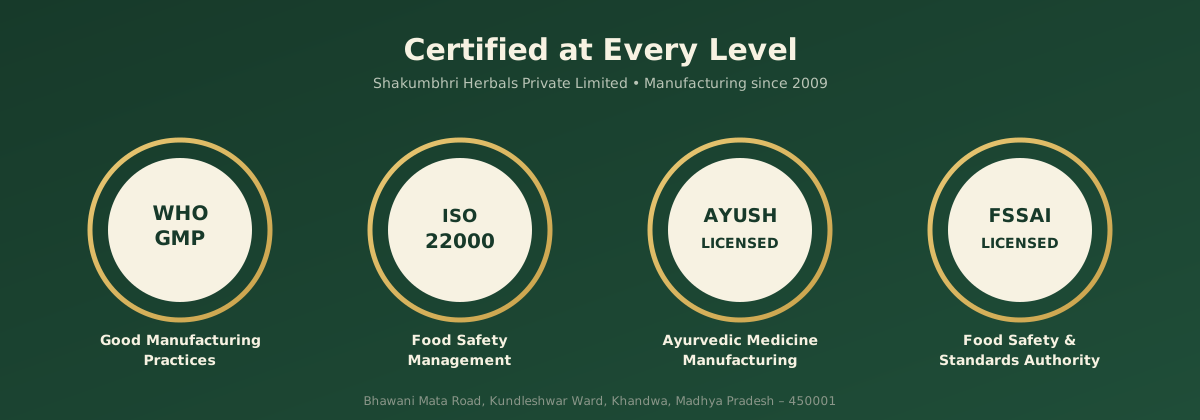
WHO-GMP (Good Manufacturing Practices) is the international benchmark for how a facility handles hygiene, equipment, and documentation. If you’re planning to export or sell to buyers who care about international standards, this one carries real weight.
ISO 22000 is a food safety management certification — relevant for anything in the nutraceutical or functional food space, where contamination control isn’t optional.
AYUSH license is issued by the state licensing authority under the Ministry of AYUSH, and it’s mandatory if you’re manufacturing classical or proprietary Ayurvedic medicines in India. Without it, a facility legally can’t make Ayurvedic medicine — full stop.
FSSAI license covers food and nutraceutical products sold in India — labeling rules, ingredient limits, safety standards. Every supplement sold in the country needs this.
We’ve held all four — WHO-GMP, ISO 22000, AYUSH, and FSSAI — since Shakumbhri Herbals opened its doors in Khandwa, Madhya Pradesh, in 2009. That’s not a recent addition to impress buyers; it’s been the baseline for how we’ve operated for over fifteen years.

What actually happens to your product, batch by batch
A lot of brands never ask what happens between “we placed the order” and “we received the boxes.” It’s worth understanding, because it’s usually where quality problems either get caught — or don’t.
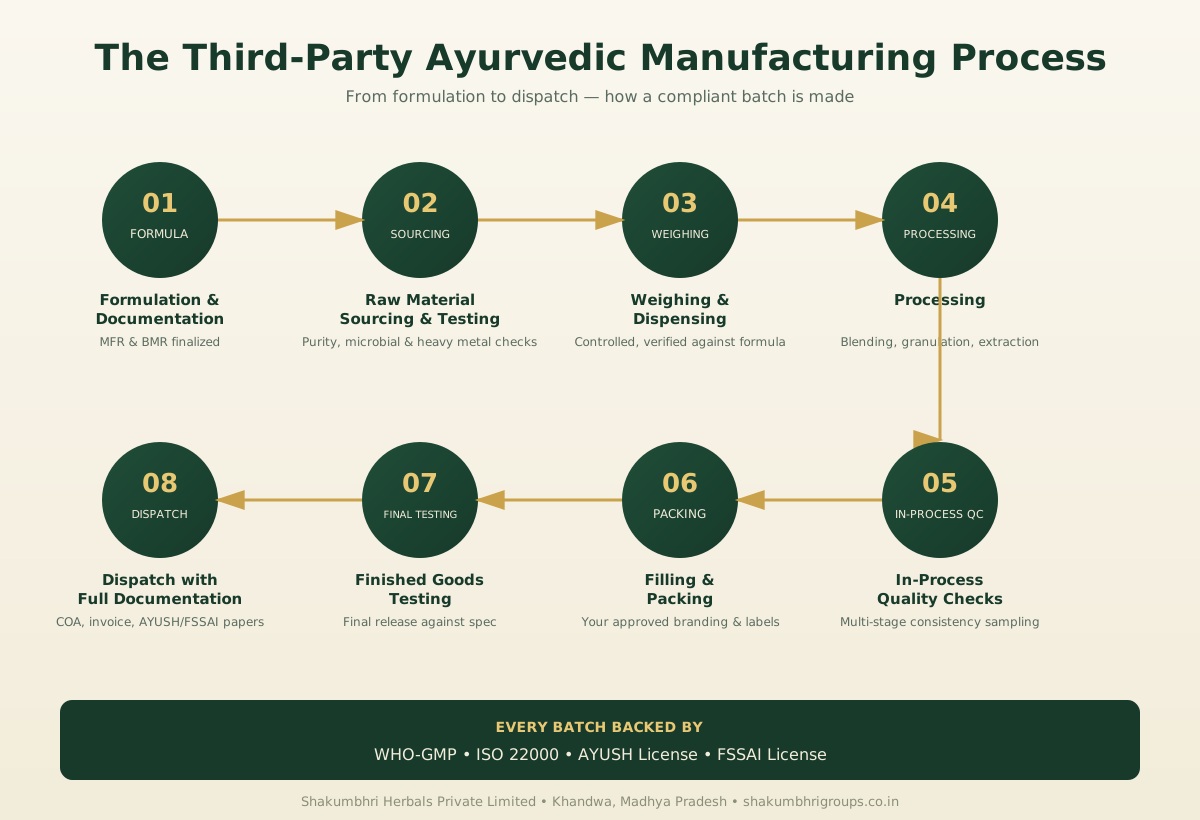
It starts with the formula being locked down on paper, along with the two documents that govern the whole batch: the Master Formula Record and the Batch Manufacturing Record. Every raw material — the herbal extracts, the powders, the excipients — gets tested before it’s even allowed near the production floor: purity, microbial load, heavy metals, pesticide residue. Only after it clears does it get weighed out against the approved formula, under controlled conditions, and moved into processing — blending, granulation, extraction, or encapsulation, depending on what you’re making.
Along the way, samples get pulled and checked, more than once, to make sure the batch is staying consistent from start to finish. Once it’s filled and packed under your branding, the finished product gets tested one more time against spec before it’s cleared for release. Only then does it ship — with a Certificate of Analysis and whatever AYUSH or FSSAI paperwork you need for your own compliance and marketplace listings.
That’s eight distinct checkpoints between an idea and a finished bottle on a shelf. A manufacturer that skips several of them can absolutely still get you a product — it just won’t be one you’d want your name on if something goes wrong.

What we manufacture
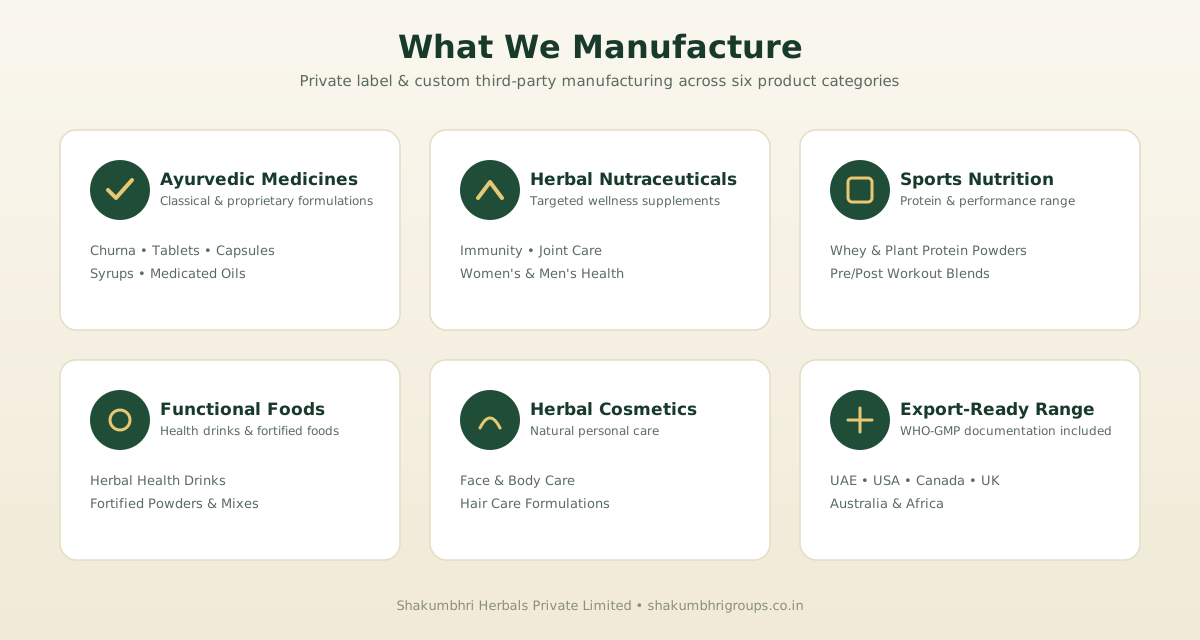
We work across six broad categories, and most brands land somewhere in this list:
Ayurvedic medicines — classical and proprietary formulations across churna, tablets, capsules, syrups, and medicated oils.
Herbal nutraceuticals — targeted supplements for immunity, joint care, women’s health, men’s health, and digestion.
Sports nutrition — protein powders and performance blends, including our own Vedamaxx GainMaxx line.
Functional foods — herbal health drinks and fortified powders.
Herbal cosmetics — natural face, body, and hair care formulations.
Export-ready products — formulated and documented for buyers in the UAE, USA, Canada, UK, Australia, and African markets.

Who this is actually for
Third-party manufacturing tends to make sense for a specific set of people, and it’s worth being honest about who benefits most:
D2C wellness brands who want to launch without sinking capital into their own factory. E-commerce sellers on Amazon, Flipkart, or Meesho who need a private label supply chain they can actually rely on. Pharmacy and retail chains wanting their own branded Ayurvedic range. Exporters who need proper WHO-GMP documentation to clear customs. And increasingly, individual practitioners and wellness creators who want to put out a signature product without becoming manufacturers themselves.
If you’re in one of those categories, the model works. If you’re trying to build something extremely niche with ingredients no one’s ever sourced before, that’s a different, longer conversation — still possible, just not a quick one.
The mistakes we see brands make, over and over
Choosing purely on price. The lowest quote often doesn’t include testing, documentation, or compliant labeling — you find that out after you’ve already paid.
Skipping the sample batch. Always get a sample before committing to a bulk order. Any manufacturer who resists this is telling you something.
Not verifying certificates directly. Ask for the actual documents. A logo on a website proves nothing.
Ignoring MOQ flexibility. If you’re still validating product-market fit, a manufacturer who insists on huge minimums isn’t the right fit yet, even if their formulations are good.
Not clarifying IP ownership up front. If you’re doing custom development, get clear — in writing — on who owns the formulation once it’s finished.
Questions people ask us most often
What’s the minimum order quantity for third-party Ayurvedic manufacturing? It depends on the product form — capsules, tablets, powders, and liquids each have different minimums. We keep MOQs flexible enough to work for both early-stage D2C brands and established retail chains. Share your product concept and we’ll give you an exact number.
How long does it actually take to launch a private label product? If you’re choosing from an existing private label formulation, you can usually be live within a few weeks, packaging included. A fully custom formulation with R&D and stability testing takes longer — how much longer depends on complexity.
Do I need WHO-GMP certification to export? Most international buyers and markets expect it as part of import compliance, though the exact requirement varies by country. Working with a WHO-GMP certified manufacturer removes a lot of friction from that process.
Will I own my brand name, packaging, and formula? Yes — that’s the entire point of this model. You keep your brand identity and packaging, and for custom formulations, the product IP as well. We handle production; you own the business.
What paperwork comes with each batch? A Certificate of Analysis as standard, batch manufacturing records on request, and the AYUSH or FSSAI documentation you’ll need for your own filings or marketplace listings.
Can you manufacture both Ayurvedic medicines and nutraceutical supplements? Yes. We’re licensed and certified for both — AYUSH-licensed Ayurvedic medicine and FSSAI-regulated nutraceuticals and health supplements, under one roof.
If you’re ready to talk specifics
The fastest way to know whether we’re the right fit is to just tell us what you’re building — your product concept, roughly how much you need, and your timeline. We’ll tell you honestly whether it’s something we can do well, not just whether we can do it.
Shakumbhri Herbals Private Limited industrial area plot no7, Khandwa, Madhya Pradesh – 450001 Phone: +91-9522236162 | WhatsApp: 919522236162 Email: info@shakumbhrigroups.co.in Website: shakumbhrigroups.co.in
[Request a Free Manufacturing Quote →] Get a Quote – Shakumbhri Groups
This article was written by the Shakumbhri Herbals team, based on our own manufacturing practices and certification records since 2009. Shakumbhri Herbals Private Limited is a WHO-GMP, ISO 22000, AYUSH, and FSSAI certified third-party and private label Ayurvedic and nutraceutical manufacturer in Khandwa, Madhya Pradesh, part of the Shakumbhri Group alongside Vedamaxx Nutrition and Innovatiq Naturals.